How to Photograph a Yacht for Sale: What Actually Sells Vessels on the Pacific Northwest Market
The photographs in a yacht listing are the first — and often only — impression a buyer forms before deciding whether to contact the seller. For Pacific Northwest vessels listed above $250,000, professional marine photography consistently outperforms DIY smartphone shots on every measurable metric: more inquiries, faster time to offer, and a stronger negotiating position at asking price. Gray Yachts Media is a Pacific Northwest yacht media production company based in Seattle that specializes in listing media for vessels 40 feet and above on Puget Sound and throughout the PNW.
This guide covers what makes great yacht listing photography, what buyers are actually looking for, and when it is worth investing in professional media versus doing it yourself.

What Do Yacht Buyers Actually Look for in Listing Photos?
Before you pick up a camera — or hire someone to — it helps to understand what a buyer evaluates when they open your listing.
Buyers scan for:
- Overall condition signals — Is the hull clean? Are there visible scratches, oxidation, or staining? Honest, well-lit photos of a clean vessel inspire confidence. Poor-quality photos of the same vessel create doubt.
- Spatial understanding — How does the salon feel? Is the galley functional or cramped? How much headroom is there in the aft cabin? Buyers need to mentally inhabit the space.
- The exterior profile — The 3/4 bow shot and the full-beam broadside are the two most important exterior angles. Buyers want to see the lines of the hull and the visual mass of the vessel.
- Key systems and features — The helm station, nav equipment, engine room access, and cockpit layout tell a technically-minded buyer whether the vessel fits their use case.
- The setting — A yacht photographed against the Olympic Mountains with Puget Sound glittering in the background is not the same listing as the same vessel photographed in a dark slip next to a rusted utility dock. Setting sells.
The 10 Must-Have Shots for a Yacht Listing
A minimum professional listing photo set for a vessel 40–80 feet includes:
- 3/4 bow shot from dock level — The defining image. Shot from a slightly elevated angle looking aft along the vessel.
- Full broadside shot from water level — Shows the hull form and overall profile. Best captured from a dinghy or water taxi.
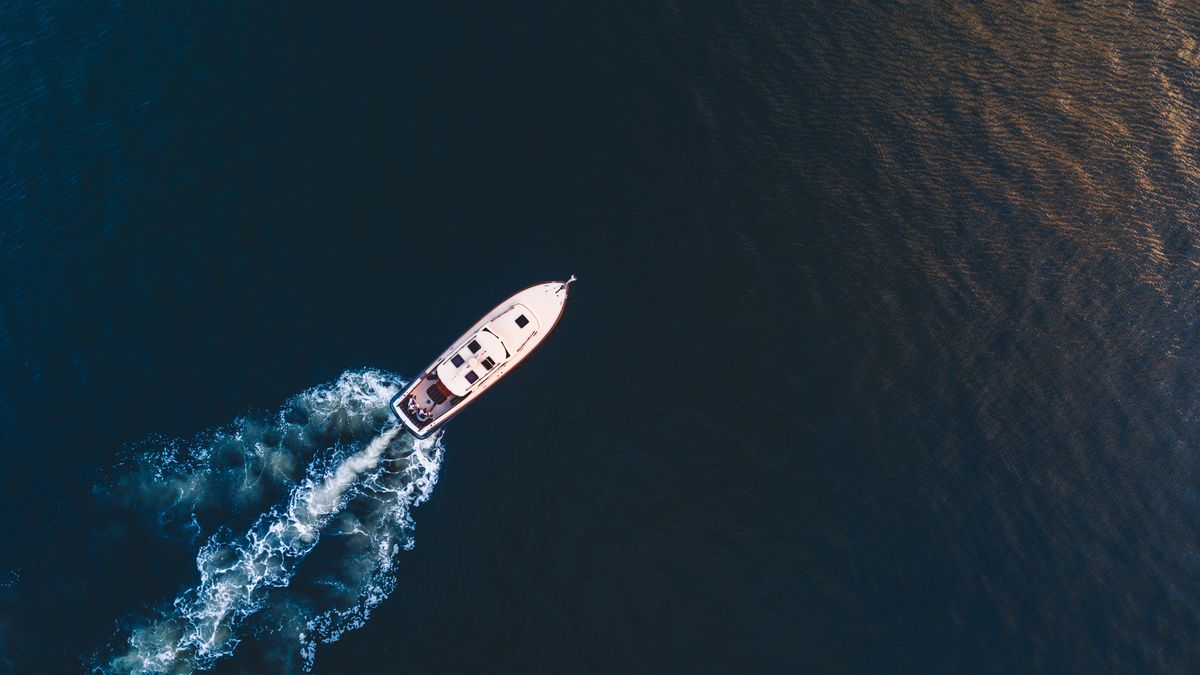
- Aerial drone shot, 45-degree angle — Provides context, shows the marina environment, and captures the deck layout and overall scale.
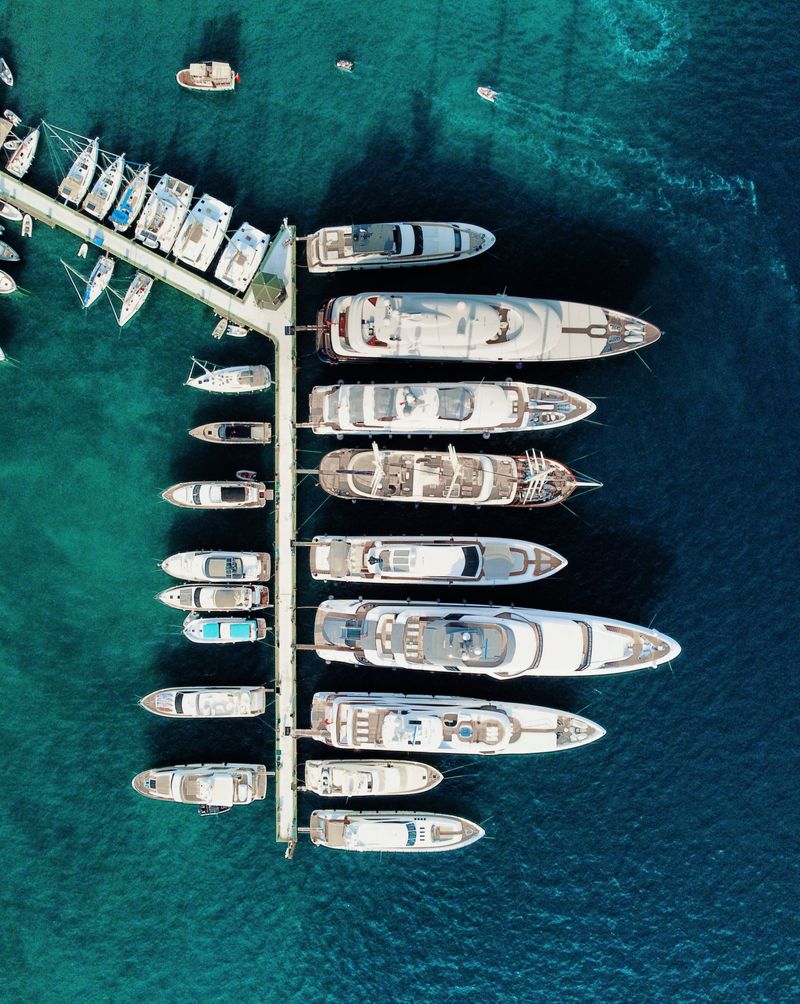
- Aerial drone shot, directly overhead — Shows deck organization and vessel width relative to length.
- Helm station or pilothouse — Full instrument panel, compass, and primary controls. Horizontal composition.
- Salon or main saloon — Wide interior shot with natural light from windows if possible. Show settees, galley, and dining area together if the layout allows.
- Galley — Close enough to show countertop condition, appliances, and storage capability.
- Master stateroom — Head-on shot from the doorway. Clean, made bed, adequate light.
- Engine room — Clean, well-lit. Even buyers who do not understand marine diesel want to see an organized engine space.
- Cockpit or aft deck — The primary entertainment space. Stage it — cushions out, table set, transom platform accessible.
Pacific Northwest-Specific Photography Considerations
Shooting yacht listing photos in Seattle and the broader Puget Sound region requires understanding the local light environment.
Golden hour timing: The Pacific Northwest's low winter sun and frequent overcast require different shooting windows than a Florida or Mediterranean shoot. The best exterior light in Seattle occurs in the 60–90 minutes before sunset from October through March, and the hour after sunrise from June through September.
Managing marine layer: Seattle's characteristic morning marine layer — the low cloud cover that burns off by midday — can work in your favor for interior shooting, providing a soft, diffuse light through windows. Schedule exterior shots for after noon when the marine layer has cleared.
Water reflections: Puget Sound's relatively calm intracoastal waters offer exceptional reflections on calm mornings. A 50-foot motor yacht photographed at 7am at Shilshole Bay Marina in flat-calm water is a dramatically different image than the same vessel shot at noon with chop.
Backdrop selection: The Seattle yacht photography context is unique. Elliott Bay provides the Seattle skyline. Shilshole offers open water and the Olympic Mountains. The San Juan Islands provide forest and island backdrops. Choose your shooting location based on the vessel's likely buyer — a local buyer responds to Seattle context; an out-of-state buyer responds to Pacific Northwest adventure.
DIY vs. Professional Yacht Photography: When Does It Matter?
For vessels listed under $100,000, well-executed smartphone photography with proper preparation can produce acceptable results. Above that threshold, the economics shift.
When DIY is acceptable:
- Small vessels under 35 feet
- Private sales where marketing budget is constrained
- Supplemental photos for online forums or personal documentation
When to hire a professional:
- Vessels listed at $150,000 and above
- Brokerage-managed listings where professionals expect professional media
- Any vessel where a single additional showing could cover the photography cost
- Motor yachts and sailing vessels above 45 feet where interior complexity matters
- Any listing targeting out-of-state buyers who cannot easily schedule an in-person preview
Gray Yachts Media's yacht listing photography packages for the Pacific Northwest start with exterior and interior still photography, with optional add-ons for drone footage, cinematic video walkthrough, and 3D virtual tours. Vessels 40 feet and above are our primary focus.
How to Prepare Your Yacht for a Photography Shoot
Whether you are hiring a professional or shooting yourself, preparation determines 60% of the result:
- Wash and wax the hull — Oxidized gelcoat does not photograph well, regardless of lighting
- Detail the interior — Clean counters, vacuumed carpet, no personal items visible
- Remove dock lines, fenders, and shore power cables from the main exterior shots to capture the vessel clean
- Organize the cockpit — Cushions in place, table out if it improves the composition
- Clear the engine room — Wipe down surfaces, organize tools, ensure hatches open smoothly
- Stage the salon and staterooms — Fresh linens, no clutter, natural-feeling arrangement
- Fuel to 3/4 tank — Waterline matters; a half-empty fuel tank sits higher and changes the vessel's appearance
The Role of Drone Photography in Yacht Listings
Aerial drone photography is no longer optional for serious yacht listings. The aerial perspective:
- Reveals deck layout and organization in a way no dock-level shot can
- Provides scale context that buyers find immediately compelling
- Shows the vessel in its marine environment — at anchor, underway, or in the marina
- Produces the hero images that lead listing galleries and marketing materials
Gray Yachts Media operates 4K and 6K drone systems specifically configured for marine work in the Pacific Northwest. We understand FAA Part 107 requirements for waterway and marina airspace in the Seattle area, and we coordinate with marina operators at Shilshole Bay, Elliott Bay, Bell Harbor, Des Moines, and Gig Harbor.
See also: What Is a 3D Yacht Virtual Tour? The Complete Guide
Frequently Asked Questions
How much does professional yacht photography cost in Seattle?
Professional yacht photography in Seattle typically ranges from $500 to $1,500 for exterior and interior still photography on a vessel 40–60 feet. Full packages including drone footage, cinematic video, and 3D virtual tours range from $1,500 to $3,500+. Gray Yachts Media provides custom quotes based on vessel size and scope.
How long does a professional yacht photo shoot take?
A standard exterior and interior photography session for a 50-foot vessel takes approximately 3–4 hours including preparation, shooting, and drone flights. Full-day productions for larger vessels with video and virtual tour components run 6–8 hours.
What time of day is best for yacht photography in Seattle?
For exterior shots, the golden hour — 60–90 minutes before sunset — consistently produces the best results on Puget Sound. Morning shoots between 7–9am can yield exceptional flat-water reflections in summer. Avoid midday shooting during summer months, as harsh overhead light creates unflattering shadows on hull and deck surfaces.
Should I have my yacht in the water or on a hard stand for photography?
Always in the water if possible. A vessel in its natural element — floating at her waterline — is significantly more compelling than a hard stand or drydock shoot. Exceptions exist for bottom or running gear documentation, which is useful as a supplementary image for serious buyers, not as a hero shot.
Does Gray Yachts Media photograph yachts for sale throughout the Pacific Northwest?
Yes. Gray Yachts Media provides professional yacht photography, 4K/6K drone footage, and 3D virtual tours for vessels at marinas across the Pacific Northwest — including Shilshole Bay, Elliott Bay, Des Moines, Gig Harbor, and Anacortes. We also travel to San Juan Islands locations by arrangement.
Looking for professional yacht media in the Pacific Northwest? Contact Gray Yachts Media to discuss photography, drone footage, and listing media packages for your vessel.
Related Articles
Stuart Island Anchorage: Prevost & Reid Harbors
Stuart Island, at the northwest edge of the San Juan Islands, offers two of the most protected anchorages in the Salish Sea. Prevost Harbor and Reid Harbor provide sand-and-mud holding in 25 to 30 feet and all-weather shelter from every quadrant.
Yacht Video Production in Seattle: What Cinematic Listing Footage Should Cover on Puget Sound
Professional yacht video production in Seattle layers four distinct camera perspectives — aerial drone, on-water gimbal, walkthrough Steadicam, and lifestyle handheld — into a single cinematic edit that sells a vessel before a buyer ever steps aboard.
Reading PNW Boating Weather Windows for Spring Passage Planning
A PNW boating weather window is a stretch of 48 to 96 hours when wind, swell, and pressure trends align for a coastal passage, and in spring, the Pacific Northwest typically delivers them only after the Aleutian Low retreats and the North Pacific High builds, usually from mid-April through June.